Ultimate Guide to Reduce Energy Loss with Harmonic Filters in 2026
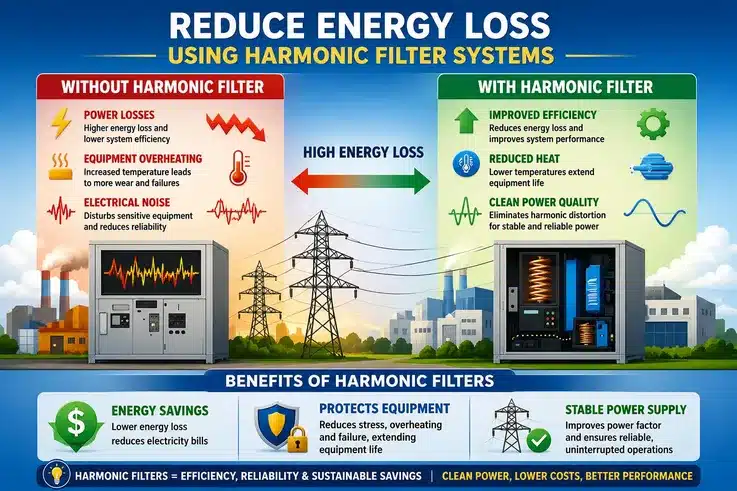
Ultimate Guide to Reduce Energy Loss with Harmonic Filters in 2026
Industrial facilities worldwide lose significant amounts of energy every year due to poor power quality, harmonic distortion, and inefficient electrical systems. As manufacturing plants become increasingly dependent on automation, variable frequency drives, robotics, and smart equipment, electrical harmonics have emerged as a major challenge affecting energy efficiency and equipment performance.
In 2026, companies across the USA, UK, Germany, Netherlands, Italy, and France are investing in harmonic filters to reduce energy loss, improve electrical reliability, and lower operating costs. Modern harmonic mitigation solutions help manufacturers optimize power distribution systems while protecting critical assets from costly failures.
Whether your facility operates CNC machinery, conveyor systems, industrial robots, HVAC systems, renewable energy installations, or process manufacturing equipment, implementing the right harmonic filter solution can significantly improve energy efficiency and deliver measurable financial returns.
Table of Contents
- Understanding Harmonic Distortion
- What Are Harmonic Filters?
- How Harmonic Filters Reduce Energy Loss
- Leading Harmonic Filter Manufacturers in 2026
- Benefits of Harmonic Filters for Industrial Facilities
- Active vs Passive Harmonic Filters
- Harmonic Filter Cost and ROI Analysis
- How to Choose the Right Harmonic Filter
- Future Trends in Power Quality Management
- Frequently Asked Questions
Understanding Harmonic Distortion
Harmonic distortion occurs when non-linear electrical loads generate unwanted frequencies that disrupt the normal sinusoidal waveform of electrical power. These harmonics reduce system efficiency and can lead to excessive energy losses throughout industrial power networks.
Modern manufacturing facilities increasingly rely on equipment that generates harmonics, making power quality management a critical operational priority.
Common Sources of Harmonics
- Variable Frequency Drives (VFDs)
- Industrial robotics
- CNC machining centers
- UPS systems
- Solar inverters
- Battery storage systems
- Automated production lines
Problems Caused by Harmonics
- Increased energy consumption
- Transformer overheating
- Motor inefficiencies
- Cable overheating
- Equipment failures
- Production downtime
What Are Harmonic Filters?
Harmonic filters are electrical devices specifically designed to reduce harmonic distortion and improve power quality. These systems eliminate unwanted frequencies generated by non-linear loads, allowing electrical systems to operate more efficiently.
By minimizing harmonic currents, filters reduce wasted energy, improve equipment performance, and extend the lifespan of critical electrical assets.
Types of Harmonic Filters
- Active Harmonic Filters
- Passive Harmonic Filters
- Hybrid Harmonic Filters
- Tuned Harmonic Filters
- Detuned Harmonic Filters
How Harmonic Filters Reduce Energy Loss
Harmonic filters improve electrical efficiency by removing unwanted harmonic currents that create additional heating, power losses, and equipment stress.
Improved Power Factor
Better power factor reduces unnecessary energy consumption and improves electrical system performance.
Reduced Equipment Heating
Excessive harmonics generate heat in transformers, motors, and cables. Harmonic filters reduce thermal stress and energy waste.
Lower Electrical Losses
Facilities often experience significant reductions in power losses after implementing harmonic mitigation technologies.
Enhanced System Reliability
Reduced harmonic distortion minimizes equipment failures and unplanned downtime, leading to greater operational efficiency.
Leading Harmonic Filter Manufacturers in 2026
Several global companies continue driving innovation in power quality and harmonic mitigation solutions.
| Company | Country | Specialization |
|---|---|---|
| Schneider Electric | France | Power Quality Solutions |
| ABB | Switzerland | Industrial Harmonic Filters |
| Siemens Energy | Germany | Power Distribution Systems |
| GE Renewable Energy | USA | Grid Optimization Solutions |
| Voith | Germany | Industrial Energy Systems |
| Alstom | France | Electrical Infrastructure Solutions |
| Cummins | USA | Power Management Systems |
| Veolia | France | Industrial Energy Efficiency |
Manufacturers in the USA and Germany often prefer Siemens Energy and ABB for heavy-duty industrial applications, while companies in France and Italy increasingly choose Schneider Electric and Alstom for integrated power quality projects.
Benefits of Harmonic Filters for Industrial Facilities
Reduced Energy Costs
Harmonic filters can significantly reduce electrical losses, resulting in lower monthly utility expenses.
- Improved energy efficiency
- Reduced power wastage
- Lower operating costs
- Better equipment utilization
Extended Equipment Lifespan
By reducing thermal stress and electrical distortion, harmonic filters help protect valuable assets from premature failure.
Improved Production Reliability
Facilities experience fewer electrical interruptions and improved operational stability.
Support for ESG Goals
Lower energy consumption contributes to sustainability initiatives and carbon reduction objectives.
Active vs Passive Harmonic Filters
| Feature | Active Filters | Passive Filters |
|---|---|---|
| Performance | Excellent | Good |
| Dynamic Response | Excellent | Limited |
| Initial Cost | Higher | Lower |
| Scalability | Excellent | Moderate |
| Industry 4.0 Integration | Excellent | Limited |
Harmonic Filter Cost and ROI Analysis
Harmonic filter installations often generate attractive financial returns through energy savings and reduced maintenance costs.
| Parameter | Value |
|---|---|
| Filter Investment | $25,000 |
| Annual Energy Savings | $8,000 |
| Maintenance Savings | $4,000 |
| Downtime Reduction Savings | $10,000 |
| Total Annual Benefit | $22,000 |
| Estimated Payback Period | 1–3 Years |
How to Choose the Right Harmonic Filter
Selecting the best harmonic filter requires a detailed evaluation of facility power quality challenges and operational objectives.
- Analyze harmonic distortion levels
- Evaluate load characteristics
- Assess future expansion requirements
- Review compliance obligations
- Calculate expected ROI
Facilities with rapidly changing electrical loads often benefit most from active harmonic filters, while stable operations may achieve excellent results with passive systems.
Future Trends in Power Quality Management
Power quality technologies continue evolving through digitalization, artificial intelligence, and smart grid integration.
- AI-driven power optimization
- Cloud-based energy analytics
- Smart grid connectivity
- Predictive maintenance
- Real-time power monitoring
Germany, France, the Netherlands, the USA, Italy, and the UK continue investing heavily in energy-efficient electrical infrastructure and advanced power quality technologies.
Frequently Asked Questions
What are harmonic filters and how do they work?
Harmonic filters remove unwanted electrical frequencies generated by non-linear loads, improving power quality and reducing energy losses.
How much do harmonic filters cost in 2026?
Industrial harmonic filters typically range from $5,000 to over $150,000 depending on system size and complexity.
Which harmonic filter is best for small manufacturers?
Passive harmonic filters are often suitable for smaller facilities, while larger manufacturers frequently choose active filtering solutions.
What industries benefit most from harmonic filters?
Manufacturing, data centers, renewable energy facilities, water treatment plants, automotive production, and industrial processing operations benefit significantly.
How do you choose the right harmonic filter?
Evaluate harmonic levels, load profiles, compliance requirements, budget constraints, and future operational goals.
Can harmonic filters integrate with existing systems?
Yes. Modern harmonic filters integrate with SCADA platforms, PLC systems, energy management software, and Industry 4.0 infrastructures.
What is the ROI of investing in harmonic filters?
Many facilities achieve ROI within one to three years through lower energy consumption, reduced downtime, and improved equipment reliability.
Conclusion
Harmonic filters remain one of the most effective solutions for reducing energy loss and improving power quality in industrial facilities during 2026. By eliminating harmful electrical distortion, these systems help organizations reduce operating costs, improve reliability, and support sustainability goals.
Industry leaders such as Schneider Electric, ABB, Siemens Energy, GE Renewable Energy, Voith, Alstom, Cummins, and Veolia continue developing advanced harmonic mitigation technologies that help manufacturers optimize electrical performance.
As detailed in our guide on Industrial Energy Efficient Furnaces, energy optimization begins with efficient infrastructure. For more insights, explore our Active vs Passive Harmonic Filters Guide and Industrial Automation Energy Management Solutions to further improve operational efficiency.
Comments (3)